Diary Writing: A Handwritten Font for Creative Projects
There I was, staring at a blank brand board, trying to find the right tone for a new artisanal café’s identity. The client wanted something warm, personal, and inviting—something that felt like it had been written by hand, not designed on a computer. That’s when I pulled out Diary Writing, a script font that felt just right for the job.
The Personality of Diary Writing
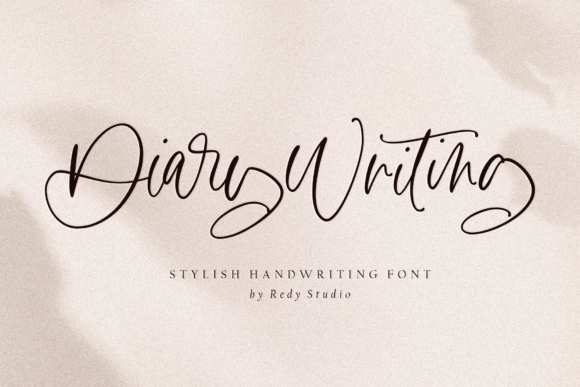
Diary Writing is a handwritten script with a soft, flowing style that feels intimate and expressive. Its strokes are elegant but not overly ornate, making it feel approachable rather than pretentious. The font has a natural, slightly irregular rhythm that mimics real handwriting, which gives it a human touch. It’s not too casual, nor is it too formal—it sits in that sweet spot where creativity meets professionalism.
One of the things I noticed right away was how well it worked with other typefaces. When paired with a clean sans serif, it added a sense of warmth and personality without clashing. On a logo concept, it brought a sense of authenticity that a more rigid typeface might not have achieved.
Testing Diary Writing in Real Branding Work
I tested Diary Writing across several design assets for the café project. On a business card, it looked great as a headline, giving the card a friendly, personalized feel. In a packaging mockup, it worked well as a product name, adding a handmade quality that aligned with the brand’s values. As a website header, it stood out without being overwhelming, and it made social media graphics feel more engaging and authentic.
On a shop sign, the font had a charming, vintage feel that complemented the café’s aesthetic. But I also noticed that it didn’t work as well in smaller sizes or when used for long blocks of text. That’s where its limitations became clear—Diary Writing is best suited for short phrases, headlines, and accents rather than body copy.
Where Diary Writing Shines
Diary Writing excels as a display font, especially in logo design, editorial design, and packaging. It brings a sense of individuality and craft that can elevate a brand’s visual identity. For a handmade shop or a boutique skincare line, it adds an element of uniqueness that sets them apart from more generic, mass-produced designs.
It also works well as a decorative accent in web design, where it can be used sparingly to draw attention to key elements. On a homepage hero section, it can create a striking visual contrast against a simpler background. In social media graphics, it helps create a cohesive, branded look that feels personal and consistent.
When to Avoid Diary Writing
While Diary Writing is versatile, it’s not a one-size-fits-all solution. In projects that require high readability, such as long-form content or formal corporate branding, it may not be the best choice. Its fluid style can make it harder to read at small sizes, and its informal nature might not align with the tone of a more traditional business.
For a corporate website or a legal document, a serif or sans serif font would be more appropriate. Similarly, if the goal is to convey authority or precision, Diary Writing might not be the right fit. It’s a font that works best when the brand wants to feel authentic, creative, and connected to its audience.
Practical Tips for Using Diary Writing
If you’re considering using Diary Writing in your next project, start by testing it in different contexts. Try it on a logo draft, a packaging mockup, or a social media layout to see how it performs. Pay attention to how it looks at various sizes and in different color schemes.
Font pairing is also important. Pair it with a complementary typeface to balance its fluidity. A simple serif or sans serif can help ground the design and prevent it from feeling too chaotic. If you’re working on a commercial project, make sure to check the licensing terms to ensure it’s suitable for your intended use.
Diary Writing is part of the Script Amp collection, which offers a range of script fonts tailored for creative professionals. If you’re looking for a font that adds a personal touch to your design work, this could be a valuable addition to your typography toolkit.
Final Thoughts on Diary Writing
Diary Writing is a font that feels like it was made for storytelling. Whether you're designing a logo, a packaging label, or a social media post, it brings a sense of character and warmth that can make a big difference in how a brand is perceived. It’s not perfect for every project, but when used thoughtfully, it can add a unique and memorable touch to your design work.